Forged in Battle Blood, preserved by half a century of defending Freedom, building a Nation, and maintaining Alliance
Combined Korea-us veterans association (CKVA)
Forged in Battle Blood, preserved by half a century of defending Freedom, building a Nation, and maintaining Alliance
Tel: 202.997.9538 Email: louis.dechert@gmail.com
CKVA ENGAGES IN FRATERNAL RELATIONSHIP WITH THE US KOREA ALLIANCE ASSOCIATION US&KAA December 9, 2016
CURRENT SITUATION IN THE REPUBLIC OF KOREA
Koreans, Americans, and friends of both: Please accept the best wishes of our Associations during these holy days and celebrations. It is noteworthy that most of our expectations focus on a “peace on earth among men of goodwill.” Many among us experienced similar wishes in the midst of the deadly winter of 1950 as we fought to secure peace in Korea.
The Alliance, ROK, UN and US, secured an unsettled peace, and ultimately freedom and wealth for the people of South Korea—and combined efforts have thus far preserved and prospered those results.
We remember that this Association— Combined Korea-US Veterans Association —was formed in the very depths of the most anti-American period in US-KOREA relations. We recall that the elected ROK President of that era was supported by only 4 % of the citizens.
Concurrently, the North Koreans of that period were steadily working to obtain weapons of mass destruction and cooperating with the Iranian government, all of which elevated DPRK aggressive strength to the highest levels in history—levels which they have since maintained.
Fortunately, in 2008 and continuing until this date, ROK citizens chose successive responsible administrations while joint plans by the US Forces Korea and the armed forces of the ROK began to be executed. The ROK continued in freedom and the US/ROK joint and combined agencies forged what today are the strongest strategic and tactical barriers to renewed aggression in South Asia. These efforts on the peninsula also reached out to Japan, and to South and Central Asia.
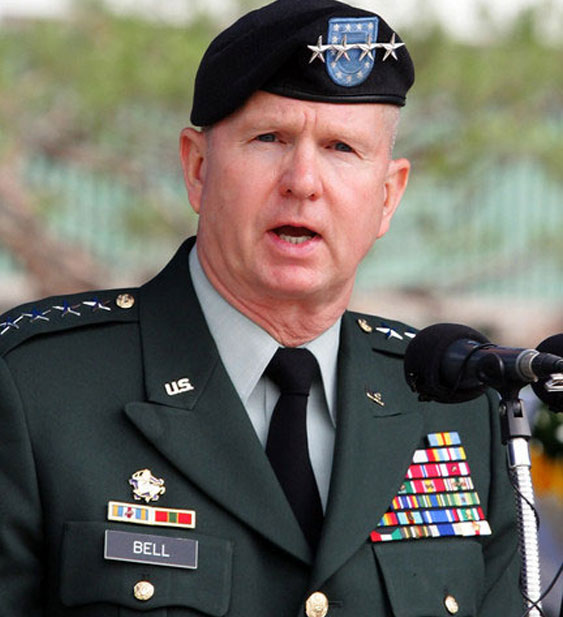
One of our Board members, General BB Bell, had a most commendable influence in initiating and accelerating those processes. His successors have followed in that pathway. An outstanding US General, Vincent Brooks, is the current US, Combined, and UN Commander-in-Chief.
The United States itself is just completing a long and bitter presidential election cycle consuming almost two years of hard words and hard feelings. Our government and our people—and our alliances—still exist and are hopefully growing stronger.
It is our hope—and prayer—that our dearly beloved sister Republic and Alliance member will surmount their present problems and likewise be strengthened. Perhaps understanding our views, herein described, will be helpful to that outcome.
Whatever the outcome, in the 2015 words of the US Secretary of Defense:
“North Korea is an up close, dangerous, and continuing threat to the security of the Peninsula and the region. But together, we will meet that threat. Together, we will stay ready to fight tonight and we will ensure that the strength of our Alliance remains ironclad and we will continue to stand shoulder to shoulder here in the Republic of Korea.” – U.S. Secretary of Defense Ash Carter, November 1, 2015
Louis T Dechert
Louis T Dechert
President and Chairman, Combined KOREAN-US Veterans Association, CKVA, Inc National President and Chairman of the Board, KWVA/USA, Inc, 2004-2008
Founder and Co-Chairman, US Federation of Korea Veterans Organizations, USFKVO, Inc Chairman, US-Korea Allies Council, UKAC, 2005-2011
Special Advisor and Honorary Chairman, US & Korea Alliance Association, 2008 to present Chairman, Louisiana Veterans Coalition, LVC, Inc, 2011-2012
CKVA is incorporated as a 501(c)(4) organization with the Secretary of State, Louisiana, USA. It is not a “tax-exempt organization.”